

The Firebird on Brokeback
Heath Ledger, Love’s Defiance, and the Legacy of a Mountain


We’re showing that love between two men is just as infectious and emotional and strong and pure as it is with heterosexual love.” - Heath Ledger
🌹 Opening Invocation
Salutations, my fearless defenders.
Welcome to the tea table. However you have found your way, here you have discovered a tea time garden, a safe haven in this ever-darkening world. Here we come together in companionship, we share our truths, bare our souls, and together we bear our burdens forward. All are welcome, provided they maintain our tea time decorum.
If this is your first visit, you are in for a special treat. On Fridays we celebrate Firebird Friday. On these days, we turn our attention from the noise of the moment to the voices of the past—the voices history tried to silence. They torched our faithful Firebirds, thinking the flames would end them. Yet, as we Keepers of Lore know, when the ashes cool and all goes still—that is when the Firebird is reborn.
While we usually honor LGBTQ+ lives directly, there are exceptions. We would not be where we are today without fierce allies who helped shift perspectives, forcing society to hear us—often at great personal cost. Naming yourself as LGBTQ+ too often means exile: from family, friends, church, even government. The fear is so great we built closets to hide in. To confront those demons willingly, with no personal stake, is rare courage. It is the truest love.
Love stories are among our oldest tales, and the tragic ones resonate most. Even those who know little Shakespeare know Romeo and Juliet. Audiences across centuries—straight, gay, and closeted alike—saw themselves in the doomed lovers. They could imagine their own longing in Romeo and Juliet’s fate.
But in December of 2005, everything changed. Brokeback Mountain premiered, and for the first time a major studio told a homosexual love story. Nearly two decades later, much has changed—and much has not. If we are to build a better future, it begins in understanding and honoring those who made such a courageous contribution.
They deserve more than my words alone. And so today, I’ve brought a friend. The incomparable Hundred Tomatoes, fresh from TIFF, joins us once more. You may recognize Hundred from our previous Firebird collaboration post on The Birdcage. If you aren’t familiar with their work you should definitely take this opportunity to subscribe.
Now sit back, pour yourself a cup of courage. Let us begin
🏆 The Award That Never Was
Hundred:
🚨 Spoiler Alert: I will be revealing plot points from this nearly twenty-year-old movie (time flies). If you wish to experience it for the first time without learning about several of the plot elements, stick to the “TL;DR verdict” at the end.
They say, “hindsight is 20/20”, but sometimes, you know a mistake gets made in the moment of its decision. I can think of no better example to illustrate this point than when the Academy Awards passed up on Ang Lee’s “Brokeback Mountain”, opting instead to pick “Crash”, now considered one of the worst films of all time to win the coveted “Best Picture” award.
To this day, people still consider that one of the craziest highway robberies in Oscar history. Even back then, people deemed that controversial snub as one that would forever live in infamy. Despite the subjective nature of film, movie buffs around the world objectively agree on the burning question, “should ‘Brokeback Mountain’ have won it all back in 2006?” with an emphatic “YES”. Years go by, and people still rave about the beautiful story told in “Brokeback Mountain”, but I cannot recall the last time someone went, “I really need to re-watch ‘Crash’, that film was a masterpiece”.
With all of this in mind, why didn’t it win? The unfortunate reality of the time held an underlying homophobia from the voting members of the Academy of Motion Pictures and Sciences. Director Ang Lee and co-writer Diana Ossana both cited discrimination in the loss, some members of AMPAS outright claimed they refused to watch the film, and to this day, vigorous debate still ensues as to what happened on the day it lost.
On a more positive note, you could argue that “Brokeback Mountain” walked, so that critically acclaimed masterpieces like Barry Jenkin’s “Moonlight” could run, breaking down all kinds of barriers for the LGBTQ+ community when it won “Best Picture” back in 2017. Since the release of “Brokeback Mountain”, films such as “The Imitation Game”, “Moonlight”, “Call Me by Your Name”, “The Power of the Dog”, and more have graced movie screens around the world, creating powerful movie magic moments in the process.
Oddly enough, despite my obsession with movies, and despite my even further obsession with the Academy Awards, I never watched “Brokeback Mountain” until this year. I learned a lot about my moviegoing habits in 2025, as I somehow never got the memo to watch “The Lord of the Rings”, “Avatar”, the 1995 classic “The Birdcage”, and more. However, I am glad I got to experience all of those for the first time as a grown adult. Now, it is time to ask the traditional million-dollar question for a new first time viewing experience for me in “Brokeback Mountain”: does it stand the test of time?
🎶 Harmonic Connection Between Souls
Without further perspective, let’s get to the retrospective!
I am glad I watched this as an adult amateur movie enthusiast as opposed to a clueless teenager, because so many elements of the production stand out to me that I otherwise would not have noticed in the past.
For starters, the score, composed by Gustavo Santaolalla, grips me from start to finish. Deciding to blend of western music alongside a traditional orchestra creates such a unique tone to everything that gets you feeling all kinds of emotions. In some cases, it inspires, other times, it creates a sense of dread as you see the lives of the two main characters falling apart, and other times accentuates the beautiful backdrop of the Wyoming scenery as you watch everything in awe. Of all the scores I have heard over the years, this is one of the more innovative ones I can think of. Not only that, but it perfectly matches the overall vibe of everything.
The main riff that comes on near the end of the film continues to remain stuck in my head as I type everything out, creating several dynamic layers that help you contemplate everything you just witnessed unfold. As the guitar riff crescendos in sound, then brings in the orchestra, you get an overwhelming feeling of grief, coupled with a tinge of triumph as you realize that the memories of the relationship between Jack Twist (Jake Gylenhaal) and Ennis Del Mar (Heath Ledger) live on, prompting Ennis to realize the preciousness of life itself, and prioritizing his daughter’s marriage over his grueling work.
Lady: I couldn’t agree more! The score of this film stands out to me as one of my all time top 5 film scores, second perhaps only to August Rush. In that film, Robin Williams playing in one of the lead roles, Wizard, remarks:
Do you know what music is? It’s God’s little reminder there’s something else besides us in this universe. Harmonic connection between all living beings, everywhere, even the stars.
I have never been one to argue with Robin and I will not start now. I know of few other scores that work so hard and go so far in connecting an audience to the character, binding them to their own sense of humanity and connection to the human experience.
🌄 Setting Is Everything, Darling
Hundred: Alongside the score, the cinematography compliments the beauty of the film, especially in the first act. Watching the main characters herd the sheep up the mountain to the backdrop of the breathtaking Wyoming scenery creates an oddly satisfying feeling. The way they capture a variety of scenes reveals so much, without the need for dialogue to spell out how transcendent their experience becomes on Brokeback Mountain.
Without a doubt however, my favorite shot comes during a scene that takes place on the fourth of July, when Ennis ends up confronting a group of foul-mouthed biker guys speaking with vulgarity around his wife and two young girls. He erupts on them at the exact same time the fireworks go off, creating this incredible moment where the fireworks symbolize his anger he unleashes.
Of course, the production design team deserves serious credit for not only scouting out so many amazingly scenic areas, but also for creating an environment that authentically resembles Wyoming. The housing, the bars, the rodeo, the campgrounds, and the wildlife all encompass an authentically western tone to it that sucks you into the universe.
It’s funny, I have spent my fair share of time in that state, and despite the movie taking place in 1963, it still feels like the Wyoming I experience today. For anyone who has never been to this great state: It truly feels like time stands still there, possessing an old timey western vibe that never goes away. In fact, the restaurant in Wyoming where Hundred Tomatoes all started resembles something straight out of the wild west in the 1800s. The team captures this essence masterfully in “Brokeback Mountain”.
Lady: Of this other timely quality I can attest. My impression of Wyoming, albeit limited to the extent of the road trip on which I was embarked, was that of utter stillness. There was hardly another person around. Simply driving seeing the emptiness, the vastness of the land, it is as if to enter is to exist on another plane. What better setting for a story about love forbidden from society?
🌟 A Star-Studded Cast
I would be remiss to not talk about the excellent ensemble cast in this film. Part of the fun of these retrospectives stems from seeing prominent names pop up on screen, prompting you to be like, “oh yeah, they were in this.” What people forget is that at the time, Heath Ledger and Jake Gylenhaal weren’t the stars they are today, nor was Kata Mara. Alongside those individuals, you had Anna Faris, Linda Cardellini, David Harbour, Randy Quaid, and Michelle Williams. This was truly a star-studded spectacle featuring a myriad of talent.
Everyone who has seen this movie can pinpoint the powerful monologues from both Ledger and Gyllenhaal, but I want to highlight some of the performances from the supporting cast. Michelle Williams as Alma absolutely blows me away with her performance. Without needing to use a ton of words, you can sense her feeling of betrayal as she starts to realize that her husband’s love lies elsewhere. Her sorrow is palpable through her eyes, body language, and subsequent actions. The range she displays leading up to her confronting her husband leaves a lasting impression, with both her and Ledger creating metaphorical fireworks that helps viewers understand why the marriage did not end up working out.
Anne Hathaway, Linda Cardellini and Kate Mara also deserve shoutouts. Each one of them portray great believability for their characters, each possessing a memorable charm to them whilst still being able to subtly showcase strong emotions in various scenes. They capably tell stories without uttering a single word.
Lady: While I applaud the entire ensemble, there is one performance that outshines the rest—both on screen and in the realm of allyship.
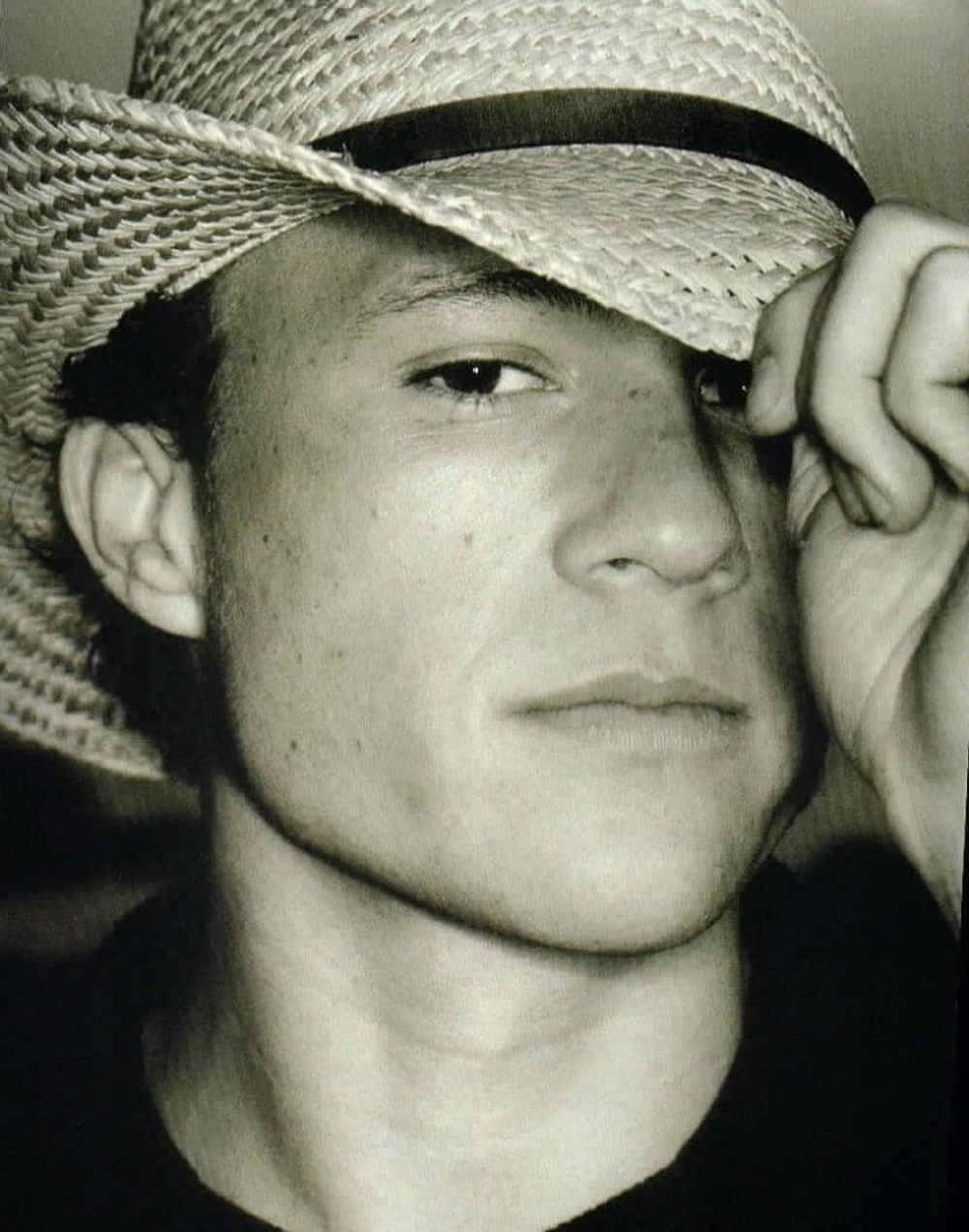
It was Heath Andrew Ledger who carried this film into Firebird immortality. His Ennis did what no American actor in a major motion picture had ever dared: he made audiences see a gay man, not as caricature or sidekick, but as a whole, complicated human being.
Heath did not have to climb this mountain. He was young, straight, white, charismatic—he could have chosen safer roles, easier success. But then he would not have been the Firebird he was.
Every LGBTQ+ person knows the struggle of awakening: that raw, painful, exhausting reckoning with who we are, and what it means in a world built to deny us. Ledger made that struggle real. In every glance, every silence, every shattering outburst, he gave audiences a mirror into the closet—and into the costly, tender fight to love oneself.
And Heath did not stop when the cameras did. When press outlets mocked the film, he refused to play along. At the Oscars in 2006, he declined to present because they wanted to include a joke about gay cowboys. His words:
“It’s not a joke to me — I don’t want to make any jokes about it.”
Take a look at one such scene where he again publicly turned the narrative back where it belonged, forcing people to see Ennis and the millions of Americans for whom this was their fate.
On set, too, he guarded the truth of the story. He insisted it be treated as a real relationship—the truest of love stories. He made sure the cast and crew honored Ennis’s life as real, not as fodder for ridicule.
Because of that, Brokeback Mountain was not just a movie. It was a testimony. Heath Ledger gave us a Firebird’s song in the shape of Ennis Del Mar. Taken too soon, yes—but never truly gone while we remember his courage, his craft, and his lesson: to see the truth in others’ lives, and love them all the more for it.
📝 TL;DR Verdict
Hundred: Although the film itself did not win “Best Picture”, Ang Lee won “Best Director” and it is not hard to see why. Lee balances the score, production design, cast, cinematography and more to create this tonally consistent western that generates a ton of intrigue from beginning to end, while reminding you of the importance of allowing people to live their lives as their true, authentic selves.
A heartbreaking “star-crossed lovers” story that features a one-of-a-kind score, captivating cinematography shots, gorgeous production design, and an extremely memorable ensemble cast, several of whom display various emotions in such subtly powerful ways.
🔥 Firebird’s Refrain
Lady: And so our tea time closes, and we send this great glowing Firebird on his flight through the sky.
Heath’s gift was vision—the ability to see through another’s eyes and let us glimpse truth we might otherwise miss. His Ennis gave the world not only a love story as enduring as Romeo and Juliet, but something even older: the love and acceptance of oneself.
For straight audiences, the film was a revelation: the story of true love, stripped of disguise. But for those of us who had walked the long road of coming out, Heath gave something radical—an image of self-love, however messy, imperfect, and hard-won.
To love oneself in a world that declares you unworthy—unworthy of marriage, family, or protection under law—this is no small act. It is rebellion. It is survival. And, in Ledger’s hands, it became art that still burns.
That fire must not be left untended. Even now, too many young Firebirds are told they are not worthy of love, and some believe it. Heath reminded us to see the truth in each other’s lives—and to love all the more for it. Today, that charge continues in the work of The Trevor Project, who provide life-saving support and hope to LGBTQ+ youth in crisis. If this story moved you, I invite you to honor Heath’s legacy by supporting:
🔗 The Trevor Project — Donate or Volunteer
Because every Firebird deserves to rise.
Until our Next Bold Move,
~Lady LiberTea ✨🫖
 | A guest post by
|
Great article I remember seeing it in the theaters my kids were young teenagers so I didn’t feel it was age appropriate but after seeing the film I sat them down and told them they needed to see it later…they had drag queens as babysitters and multiple uncle couples in their lives but heaths character in his struggles would teach them a lot about our chosen family thank you for pointing out this remarkable actor taken too soon
I am still waiting for that “adore” button - I could sure use one here right now!!!